
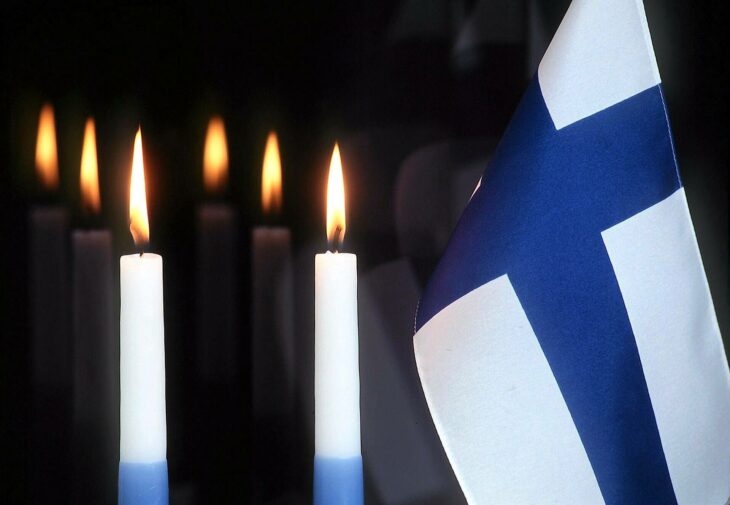
White and Blue Candles Light Up Finland’s Independence Day
Vol.28, Issue 13, 12 December 2025
For more than 90 years, Finns have placed two candles in their windows on Independence Day to symbolize national freedom. Traditionally, the candles are blue and white, reflecting the colors of the Finnish flag.
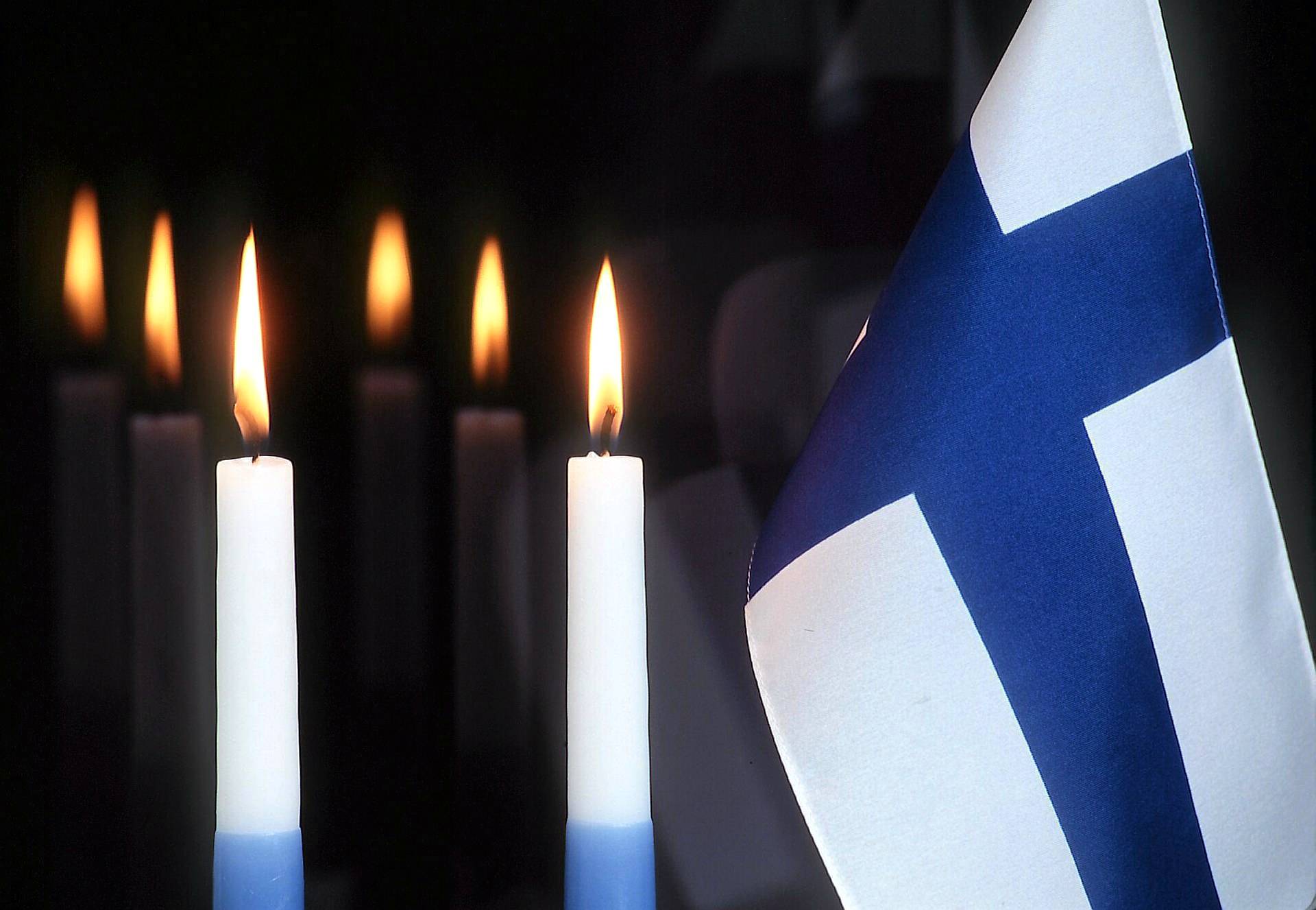
Image source:
https://antonpihl.wordpress.com/2019/12/06/white-and-blue-candles-illuminate-finlands-independence-day/
Today, thousands of Finnish families continue this tradition by lighting two candles on December 6th and placing them on their windowsills in honor of Finland’s independence.
If you take an evening walk in Finland on December 6th, you will probably notice something quietly beautiful: two blue-and-white candles glowing in the windows of many homes. (Although two candles are the most familiar symbol, many families choose their own variation today—some light just one blue-and-white candle instead.) At first glance, the candles look like simple holiday decorations. But like many Finnish traditions, they carry layers of history, memory, and quiet emotion.
The first meaning is the one most Finns mention today. The two candles are a gentle tribute to those who defended Finland’s independence—especially during the Winter War and the Continuation War. The small flames symbolize respect and remembrance, but also peace. During the coldest and darkest part of the Nordic winter, they remind people that light always returns.
There is also an older tradition behind this custom. Long before Finland gained full independence in 1917, families placed candles in their windows on December 6th to honor Johan Vilhelm Snellman, a national philosopher and statesman whose birthday falls on that day. Lighting candles became a quiet expression of cultural identity and support for Finnish language and education during a period of Russian rule.
Over time, another story has woven itself into Finland’s cultural memory. According to a widely repeated legend, candles in windows once signaled safety for Finnish students and activists traveling in secret. Historians note that this detail cannot be fully confirmed, yet the story remains meaningful because it reflects the spirit of solidarity people associate with the tradition.
Perhaps that is why the custom still feels so powerful today. Two simple candles, shining softly in the cold night, create a connection between private homes and national history. They speak of courage, of quiet resilience, and of the hope that carries Finland through both long winters and difficult times.
And if you have ever paused to look at those glowing windows on a December evening, you may have felt it too—the moment of stillness when a small light encourages you to slow down, breathe, and remember what truly matters.
Image source: https://www.shutterstock.com/video/clip-1084627228-traditional-blue-white-candles-flag-finland’s-independence?dd_referrer=https%3A%2F%2Fwww.google.com%2F
PS:
If you enjoy learning about culture through films, there is a classic Finnish movie worth watching. Finland’s national broadcaster YLE often shows Tuntematon Sotilas (The Unknown Soldier), based on the novel by Väinö Linna. The film follows a group of Finnish soldiers during the Continuation War and has become one of the most influential portrayals of Finland’s wartime history. It offers a powerful window into the experiences that shaped the country—and helps explain why days like Independence Day carry such deep meaning.

- White and Blue Candles Light Up Finland’s Independence Day - 12th December 2025
- Too Dark to Wake Up? Maybe You Need a Finnish Kirkasvalo - 5th December 2025
- Eco Finland: The Green Way of Living - 28th November 2025