
“The Real Opportunity Is Building a Data Economy in Kouvola”
Volume 29,Issue 10,20th November 2026
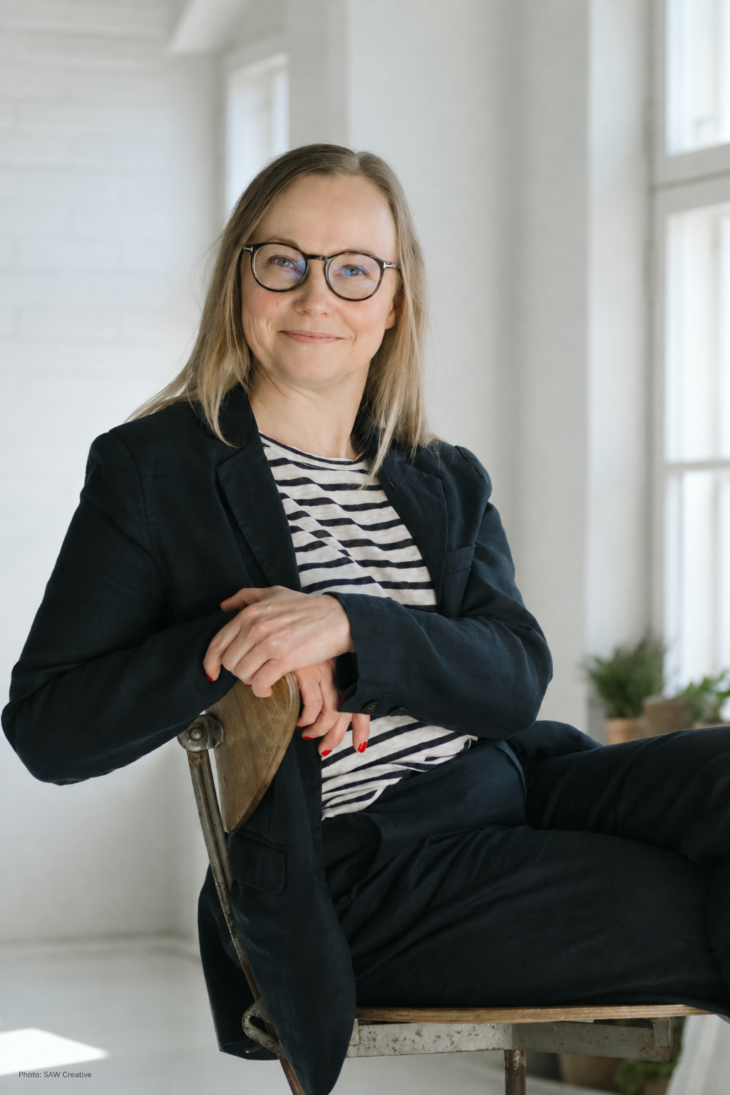
Recently I had the opportunity of obtaining a brief interview from Sanna Kauppi ; Communication and Marketing Manager of Kouvola Innovation Oy (Kinno) , post a guest lecture organised at our university by senior lecturer Maarit Widman. My sincere thanks to both of them for their time and efforts to share their valuable knowledge and experience with us.
Q : What makes Kouvola an interesting location for data centre investments compared with other Finnish cities and established data centre hubs in the Nordic region?
A : Kouvola has an unusually strong combination of energy infrastructure, available industrial land, connectivity, logistics and investment readiness.
The region’s industrial history is particularly important. The forest industry helped create strong electricity transmission infrastructure, and further grid investments are planned. At the same time, Kouvola has suitable and pre-zoned sites, good fibre connectivity and a location at a major road and rail junction, with relatively short connections to the Helsinki metropolitan area and the international airport. Kouvola Data Valley specifically highlights energy availability, fibre connectivity, renewable energy, land availability, smooth permitting and comprehensive investor support as its core proposition.
Most importantly, this is no longer only a theoretical investment proposition. The city’s roadmap identifies major projects involving atNorth, Hyperco/DayOne and Nova Complex, with combined planned electricity capacity of about 700 MW. The roadmap puts their combined investment value at approximately €7 billion.
So, I would describe Kouvola’s advantage as a combination of scale and readiness. Instead of competing only on the price of land or electricity, Kouvola can offer locations where very large investments can be developed together with the surrounding energy, education, research and business ecosystem.
Q : Could this emerging industry open up career opportunities for graduates from non-technical backgrounds as well?
A : Absolutely. This is an important message for students.
A data centre is extremely technical infrastructure, but the data centre industry is much broader than the data centre itself. As the cluster grows, companies will need people working in procurement, finance, HR, communications, sustainability, compliance, sales, logistics, project management and supply-chain management, in addition to engineers, electricians and IT specialists.
The Finnish industry ecosystem already illustrates this breadth. FDCA’s ecosystem catalogue currently covers hundreds of organisations across data centre operators, technology suppliers, construction, planning and professional services.
For a business graduate, for instance, procurement for a large data centre construction programme can be highly relevant. A logistics graduate can work with complex international supply chains. A sustainability specialist can work with energy efficiency, environmental reporting and circularity. Business-information-technology graduates can move into cybersecurity, service management and data governance.
Q : Could the development of Kouvola as a data centre hub help attract and retain young professionals?
A : Yes, but data centres alone will not automatically solve the challenge.
Young professionals stay in a region when they can see a career path rather than a single job. That is why creating an ecosystem matters so much. If several operators, suppliers, technology firms, energy companies and research organisations are active in the same region, a graduate can change roles and employers without having to leave Kouvola.
There is also an opportunity to attract people who may not previously have considered Kouvola. International data centre companies create international working environments, and projects of this scale attract specialist firms and professionals from Finland and abroad.
But employment is only one part of the equation. Kouvola must combine career opportunities with affordable housing, good services, attractive living environments, connections to the Helsinki region and a welcoming environment for international professionals and their families.
One concrete approach would be to create a visible Data Valley talent pathway from studies to employment: company projects during studies, internships and summer jobs, thesis assignments, graduate positions and continuous learning. Kouvola Data Valley already describes talent matching, recruitment services and education-industry cooperation as elements of its model.
If students can see that pathway before graduation, Kouvola becomes much easier to imagine as a place to build a future.
In other words, students should not interpret “data centre” as meaning that they need to know how to maintain a server. The industry needs multidisciplinary teams.
This is also an area where XAMK and other educational institutions can play a very practical role by combining disciplines and developing short courses, specialisations, internships and thesis projects together with employers. Kouvola Data Valley already identifies education, training, RDI, recruitment and talent matching as core parts of the ecosystem.
Q : Beyond the construction and operation of data centres, how can Kouvola ensure that these investments generate long-term economic benefits for the wider region?
A : This is perhaps the most important question for Kouvola.
A data centre should not be viewed simply as a building containing servers. It can become an anchor for an entirely new industrial ecosystem. Kouvola’s objective should therefore be to maximise the share of the investment that stays in the regional economy.
There are opportunities for construction companies, electrical contractors, HVAC and cooling specialists, engineering and maintenance companies, security providers, logistics businesses and professional services. Kouvola Data Valley is already developing a supplier network specifically to connect companies with data centre projects in areas such as construction, design, maintenance and specialist services.
The second step is more ambitious: using the infrastructure as a platform for new digital and energy businesses. Computing capacity can support AI companies, software firms, research projects and new services. Waste heat can potentially form part of local energy and industrial solutions. Educational institutions can develop specialised programmes, applied research and company projects around areas such as automation, cybersecurity, energy management and AI.
That is why cooperation between the City of Kouvola, Kouvola Innovation, XAMK, vocational education providers, companies and data centre operators is critical. The objective should not merely be data centres in Kouvola, but a data economy built in Kouvola. This ecosystem approach is explicitly at the heart of the Kouvola Data Economy Roadmap.

- “The Real Opportunity Is Building a Data Economy in Kouvola” - 20th November 2026
- It was a Good Day to Catch Up and Recharge: Student Retreat at XAMK Kouvola - 13th November 2026
- More Than Language: How the Red Cross Helps International Students Feel at Home in Kouvola - 6th November 2026